Katie

Dance teacher Katie Blacksmith Adams knows what it is like to be on the stage as a professional and an amateur. She tells Ailsa Adams about life in America and giving it all up to move thousands of miles across the pond for love.

Halfway through our first meeting, Katie gets up to do a quick tap-dancing routine to the song on the radio. It feels like a regular occurrence for her own gratification rather than a showing off exercise. Her dream dinner table would include Gene Kelly and Gregory Hines, though I’m sensing there would be more dancing than eating.

A dance teacher and performer to crudely simplify her artistic talents, her latest project is choreographing, directing and producing Ghost the Musical at Wildcats Theatre School in Stamford, Lincolnshire.

Her beauty is breath-taking in an effortless, good bone structure, aging beyond her current 33 won’t be an issue type of way.  Long, thick brown hair falls perfectly below her shoulders, mimicking Kate Middleton after an expensive blow dry. She is rarely seen out of Ugg boots and at least one thick cardigan as Ryhall feels like the Arctic when you are used to LA temperatures.

As her mouth opens to speak you can tell she is American before the dulcet tones from Los Angeles come out, as her teeth are remarkably white and perfectly aligned. Top and bottom. “We all get braces and go to dentist every six months for cleans. It’s all privatised so people spend lots and lots of money on it, especially in LA.”

Katie is a triple threat, someone who can sing, act and dance, referenced heavily in the TV series Glee. She would not describe herself that way but her back catalogue disagrees.

At New York University she majored in drama and minored in production, a prestigious university that has churned out superstars such as Kristin Bell, most known for voicing Anna in Disney’s blockbuster film Frozen.

Yet Katie is uncomfortable name dropping the endless famous people she has worked with. Perhaps she has spent too long in Rutland and adopted the British nature of not blowing your own trumpet, but she shifts in her chair when probed.

The list includes icons like Bradley Cooper and strangely Lady Gaga, a fellow alumni from NYU she describes as eccentric, long before A Star Is Born brought them together.

“Bradley was so sweet to work with and he made a point of learning all our names, bringing back a fruit basket at the end of the summer to thank us and yes, he is that stunning in real life,” she laughs.

Before the #metoo movement erupted, Katie was familiar with the concept, though thankfully not to the horrifying extent of some. The director of a Toyota commercial was enough to make her question her life choices and change direction to work out of the spotlight, choosing to produce and teach over acting.

“What put me off acting was I was finally doing what I wanted to do professionally but it wasn’t fun. It was so bad I had to call my agent as I felt unsafe, I am not a complainer and can defend myself, but he told the casting director and she came to set and basically chaperoned me. I thought ‘I don’t want to be a part of this world’.”

At the age of 17 Katie got an opportunity most can only dream of when her college, Hamilton Academy of Music in LA, set a project of making a film in partnership with 20th Century Fox. Cast as the producer, she got paired with Fred Baron, the producer of Moulin Rouge and learnt first-hand what a producer’s role was.

“I had no idea what a producer was but went with it as my friend Ashleigh wanted to be the director. It was an awesome experience and was the reason I minored in production at NYU. It was really hands on in Fox’s production suites, learning to use equipment and techniques used in films with an absolute producing giant.”

Despite all her experiences in New York, LA and Texas to name a few and endless opportunities working with theatre production greats like Daryl Roth, a ten time Tony-Award winning producer of over 120 productions, and Alex Timbers, who is currently producing Beetlejuice on Broadway, Katie gave it all up and moved to England for love and is currently fitting teaching work around her baby.

“I met Ben, my husband, when I was three. Though we didn’t get together for over twenty years. I wouldn’t leave the States officially without a ring, he wouldn’t ask me to marry him without living with me first, so we ended up in Northampton, England to test the water,” says Katie.

The future is wide open which is both exciting and horrifying for her. Her teaching qualification, a diploma in dance education will be completed in a few months and she is enjoying the slower pace of life in Ryhall. Her only current front-and-centre gig is her role in the Bomber Belles, a trio who sing wartime songs based at the International Bomber Command Centre in Lincoln.

“What I miss most about America is my friends and though this will get me in trouble, Broadway over the West End any day. The biggest difference is training. In the UK I am expected to teach the children one 30-minute lesson a week. In the States that would be at least 60 minutes and three times a week.”

Her biggest regret artistically is letting her anxiety hold her back. “I have always suffered with anxiety and it’s made me not take risks I should have taken. A lot of people have complimented me as a performer, but I have chosen not to believe them. I am not kind to myself.”

I haven’t interviewed Meghan Markle under a pseudonym, though if Katie told me she was moving to Canada and had landed a Disney voiceover deal, I might question the parallels further. 

The Dreaded PT

I can’t put it off any longer. The dreaded PT is upon us and actually I think I would rather be shouted at in the gym for an hour than face the real reality of…

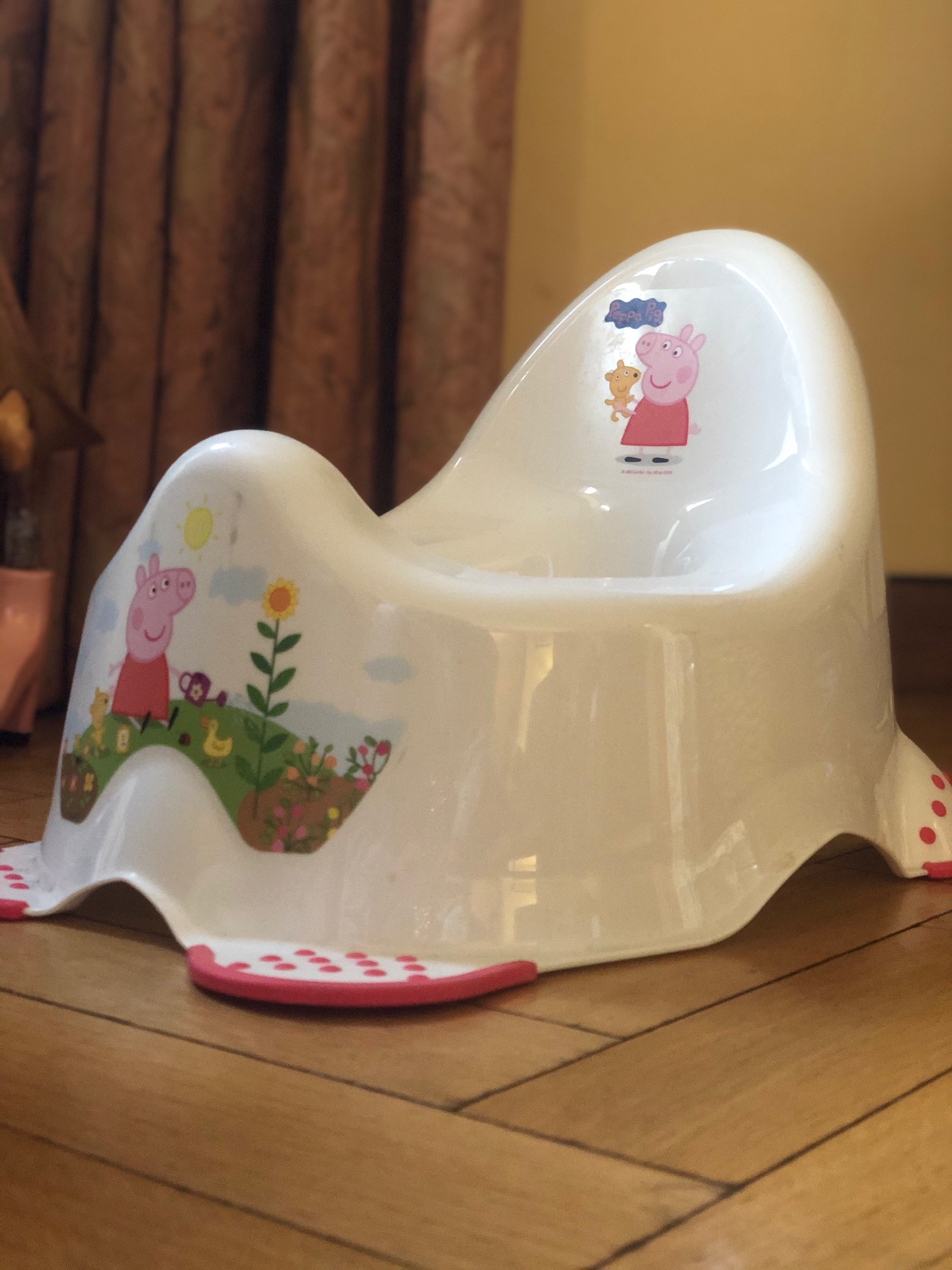
Potty training.

As a mum of two boys I am outnumbered in the toilet department, and have to just accept that for the foreseeable future, I will have to sprint to the toilet ahead of any guests to make sure they don’t get soggy socks, or worse. If only that was a joke.

I have shamefully made a swift exit from a local café that has a small area of soft-play after my first born decided the artificial grass looked too realistic. The fact he is comfortable, as actor Jack Black would put it, to ‘drop-trou’ in nature comes with its own horrifying tales but this might have been the worst of his toilet antics. I can only assume I have the ‘flight over fight’ instinct to account for the dash. A moment impressed on my memory as a parenting low point, normally popping into my head just as I am falling asleep.

I have read hundreds of advice articles online, even delving into the lengthy opinionated threads on Mumsnet to no avail. Nappy-free time always leads to accidents and Wilf is the child who will happily sit in wet pants, I am guessing until they dry out again?

The only time he is willing to sit on the potty is after he has filled his nappy. His odd thought process in which he thinks if he sits on the potty after the event, he will skip the cleaning process, like the potty has some magical cleaning process of its own.

Perhaps he has seen a self-cleaning toilet during one of his Youtube sessions.  It would surprisingly be a lot more interesting than watching an American child unpackage and play with a toy Wilf actually owns and could be playing with in real life himself. That would be far too sensible.

So alas I am in limbo, trying to remind myself that no grown man crawls into a board room meeting in a nappy as he never learnt to walk or use a toilet.

Although now I have written it, perhaps it doesn’t seem completely inconceivable in a morning after a drug-fueled bender, Wolf of Wall Street, lads in the city-esque way.

The Terrible Twos

The clock strikes midnight turning your gorgeous bundle of joy into a two-year-old. Like magic dust has been sprinkled over their pillow as they sleep, the ‘terrible twos’ alter their attitude and you are left wondering what on earth happened to your baby over night?

The sweet alliteration lulls you into a false sense of security that it can’t actually be that bad, don’t be fooled. Friends assure you their child made three drama free then whisper something inaudible about threenagers.

To offer a little advice, commiseration or encouragement, I have compiled my top moments of the phase so far. You will live with a mini volcano that will erupt spontaneously and inconsiderately though. Enjoy that.

They will ask for a blue plate, they want a blue plate, you serve dinner on the blue plate. They will scream for half an hour on the floor as they wanted a red plate and you are such a mean mummy for not sensing this telepathically.

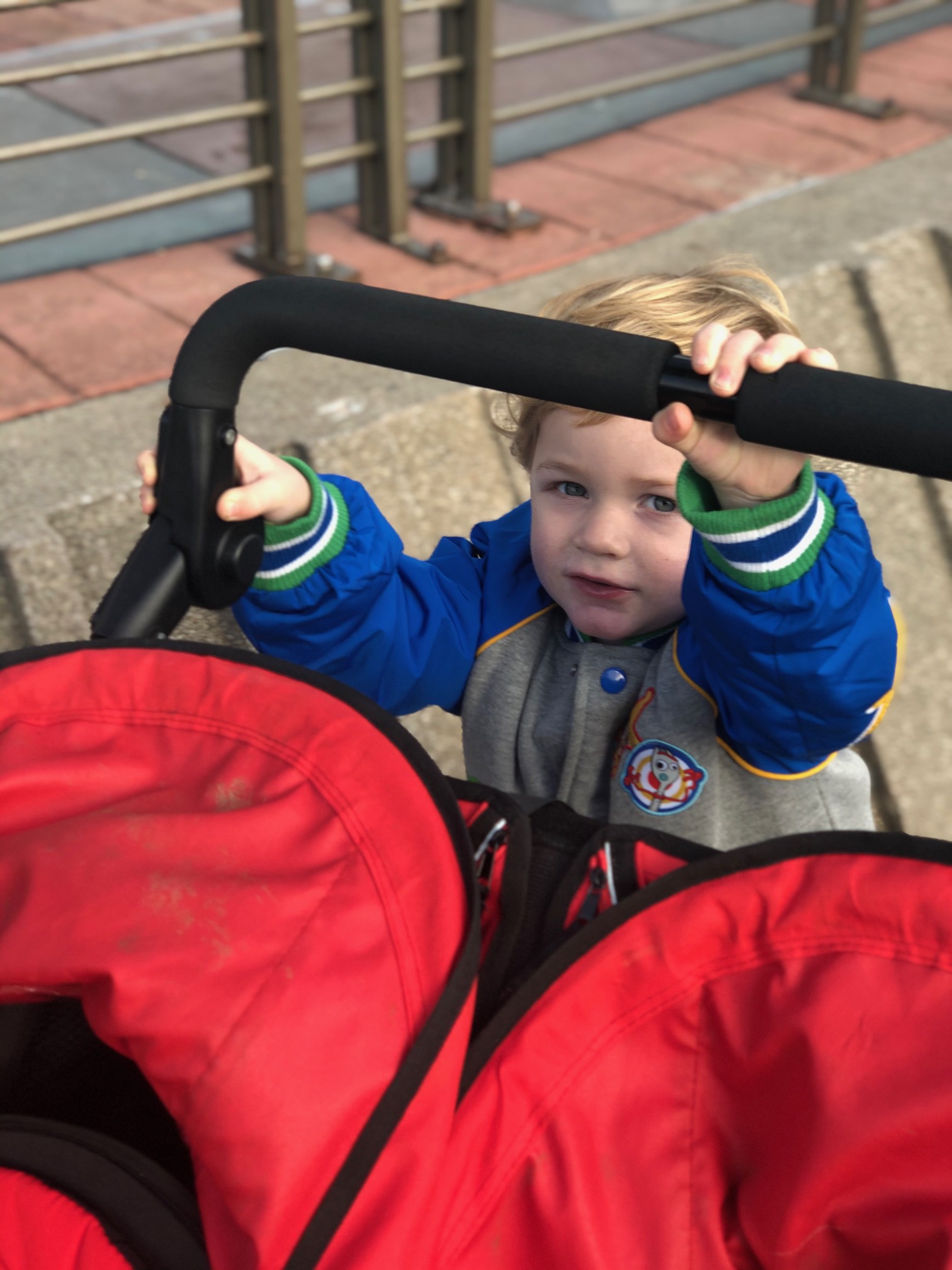
For public meltdowns lift them up by the back of their coat and march out as if they are some sort of wriggly suitcase. Just always remember to zip up first to avoid face-plants.

They will sense any ounce of mum guilt and fully throw it back in your face. My Lincoln stopovers to get last minute projects done in December resulted in a meltdown at Disneyland as neither child wanted to sit with me on a ride, only Daddy. If you take it personally you will cry into your £20 cheeseburger and feel like a tit.

Their sweet nature and willingness to please will disappear, not all the time but enough to make you question if it is worth a Google to see at what age personality traits are set. I am reliably informed Adolf Hitler was a lovely child, maybe it’s not time to panic just yet.

 I smiled at Wilf playing the other day and he turned to me, pointed and shouted: “Do not smile at me mummy,” with the most furrowed brow a tiny face can muster.

Most of all try and keep a straight face. It is so hard at times, especially when they are in trouble for answering their dad back in a hilarious mimic involving a puppet parrot.

If all else fails, hide in the pantry and eat their Christmas chocolate whilst chanting: “You are not the boss of me.”

School Mum

At the tender age of 30 I became a school mum, no longer smug booking term time holidays at bargain prices. I’d heard so many horror stories about the dreaded school gate. A year in, what would I tell myself?

BBC’s Motherland, a comedy based around a group of school mums is actually quite depressing as it’s remarkably accurate, apart from the abundance of wine at children’s birthday parties.

So far that hasn’t materialised. The cliché characters really exist. It’s worse than being 15 years old in an all-girls school, with hormones almost visible as they float down the corridor. Bored school mums can be meaner than the Year 11 captain of the netball team. The worst part is, they will be nice to your face. Just blanket smile at everyone, it’s the safest option.

The school day is ridiculously short. It’s not really worth your while leaving. Why lose your parking spot, a mere 25-minute stroll from the gate after-all? Any trips you do result in a stressed and rushed commute back.

The image of your lonely child, last to be collected, assuming you’d forgotten them impressed on your mind. You’ll shout profanities at slow and leisurely drivers, praying they aren’t repeated at teatime by your two-year-old. Me: “Well they didn’t hear that from me?” Two-year old: “Mummy you said the old man was a sh*t driver.”

You can buy 30 pairs of navy socks and you still won’t be able to find a pair when you are running late. Note, it’s always these mornings that your child tells you they need their PE kit, blazer and library book but can’t possibly find it all themselves as they have to pick a ‘pocket-toy’ that will inevitably be lost in the playground, or launched over the fence. It was always a dare, never original thought, apparently.

Skive work for assembly. Watching your child spot you at the back of the hall and grin from ear to ear will make you want to sob uncontrollably. The guilt at missing one will be huge. “I looked for you mummy, but I couldn’t see you.”

The best part though is you will click with a few school mums and feel like you are 15 again, discussing boys in a hot tub. Only the boys aren’t boyfriends this time, just mini people who stole our hearts the day we brought them into the world.

Screen Tourism


As the latest series of the BBC’s Peaky Blinders reached its disappointing conclusion, like many others across the world, I felt deflated at the prospect of waiting two more long years for the penultimate, and hopefully more action-packed, series.

As the mania and hype builds further, the Peaky Blinders effect has tourism at an all time high in and around Birmingham as we satisfy our obsession.

Birmingham is home to the Peaky Blinders gang and, though predominantly shot in Manchester and Liverpool, the West Midlands city has seen tourism spike since the first series aired in 2013.

For the launch of series 5 in August 2019, the BBC put a fan painted mural on the side of the Custard Factory, a creative hub in Birmingham and the former site of Bird’s Custard. Gang leader Tommy Shelby (Cillian Murphy) looks down over Digbeth, drawing fans directly into the heart of the city.

Some scenes are shot at the Black Country Living Museum in Dudley, which has just had its fifth year of growth. Visitors are up a third since 2013. The museum made a loss of £599,745 in 2012/13 and in its annual report for 2018 shows profits of £910,095.

I, like many, want to recognise something from the show, or to have a photo taken or stand in the spot the actors did. It’s silly when you think about it, but it’s a phenomenon that is making the area a lot of money and shows no sign of slowing down.

Shops, a festival, escape rooms, themed evenings, series screenings, it all sells out almost instantly. The impact it’s had is incredible with Joe Godwin, the director of BBC Midlands, telling the Guardian: “Peaky Blinders has been a game changer for Birmingham.”

Sticking to the UK, the BBC series Poldark draws tourists to Cornwall with Visit Cornwall claiming it accounts for 13 per cent of all holidaymakers. Though the fashions, drinks and theme of the show have not made it to the mainstream like Peaky Blinders (thankfully, not sure I am feeling a corset) not everyone in the south is happy, complaining tourists ruin the area.

I would argue the opposite and a programme that encourages any sort of UK staycation is positive for the economy, the arts and history of the local area. I highly doubt the Poldark crowd is particularly larger lout-ish either and is probably more inclined to buy branded tea towels than other fans!

Virgin jumped on the bandwagon last week and re-launched Gavin and Stacey tours of Barry Island in Wales. For £60 you and a friend can go on a bus trip around all the filming locations on a Dave’s Coaches branded bus. Those who booked to go in July 2019 were treated to selfies with the show’s star James Corden as it coincided with the filming of the Christmas special.  And Marco is a real person selling his ice-cream, so he must be thrilled!

I am excited to be inspired to visit somewhere else in the UK as the next big thing launches on the BBC and hope the Peaky Blinders bubble doesn’t burst. Perhaps a getaway to Dudley is on the cards, who would have thought it?

And yes, Tommy Shelby is in my dining room


Ticket pricing in the West End

Some of my fondest childhood memories are annual birthday trips to London. Shopping, sightseeing, amazingly calorific food topped off with a West End theatre production of my choice. The soundtrack tape was always purchased and formed the basis of car sing offs for the next six months.

We would occasionally pre-book tickets but generally wing it, visiting a box office and snapping up tickets for a show starting in 20 minutes across town and run fast, simultaneously mocking our mother’s bladder function.

An annual ticket survey conducted by The Stage in October 2019 found the most expensive tickets have risen on average just under 60 per cent since 2012 though, pricing a lot of us out of the market. Average seats are up 13 per cent on 2018 and personally I will not part with money for the cheapest, restricted view seats – not to mention how quickly they sell out.

Lin-Manuel Miranda’s smash-hit musical, Hamilton, is the latest show to be criticised over pricing and a quick Google for tickets shows Ticketmaster first. A returned ticket for January 31 in the stalls or royal circle is £287.50 and a grand circle, nose-bleeder seat is £66.25. So four tickets with a decent view would cost a staggering £1150!

Tickets direct through the Victoria Palace Theatre are £250 for the best seats available, so can Ticketmaster really justify charging £37.50 a head to handle the process?

Liberal Democrat peer Patrick Boyle tabled a motion for debate on this issue in April 2019. He wants more regulation in the industry with his speech in the House of Lords centered around the idea many can no longer afford ticket prices, with a lack of transparency on where the money went. He is the Earl of Glasgow, so if he can’t afford it there is no hope for me.

I spoke to Chris Kirkwood, the chief executive of the Lincoln Drill Hall, about pricing in general and why the West End is so expensive compared to Lincoln. Chris said: “I would argue the Government will stay out of the debate in terms of the West End as it’s a commercial proposition. I’m not sure they could regulate what someone charges for a product any more than they could do for the car industry.

“In the West End an estimate to put a new musical on the stage costs £1million upwards, so pricing is always going to be high to recoup costs. Channel 4 did a documentary a few years ago and the producer of Top Hat suggested they had to gross £250,000 per week just to stay afloat. With that in mind the West End couldn’t move towards Pay What You Decide.”

My local theatre, the South Holland Centre in Spalding, is a lot more comfortable than the dizzying heights of the grand circles of London so I want to book more National Theatre Live.  For under £20 a live streaming of the performance is broadcast direct from the theatre.

But I will need a West End fix every now and again for the whole experience, so I better start another Hamilton-sized piggy bank.

Winter Wilson Preview

The folk band Winter Wilson are back on tour, performing their original folk songs with tight harmonies at the South Holland Centre in Spalding on January 8.

The band members are Kip Winter, who provides female lead vocals and plays the flute, accordion and guitar and Dave Winter, who plays the banjo, guitar and provides male vocals.

Martin Browne from the Spalding Folk Club said: “The sound itself is melodic, compassionate and delivered with sweet, accurate voices that frequently soar with beautiful harmonies.”

 The married couple have toured extensively across the world since becoming full time musicians eight years ago, playing Spalding twice before in 2016 and 2017. They live in Sleaford and met 25 years ago, explaining the chemistry on the stage.

The Spalding concert kick-starts their 2020 tour, cutting back to 70 dates after the busiest year yet in 2019. This included a world tour with a gig at the Edinburgh Fringe and a Canadian show that had to be live streamed as it sold out so quickly.

The year also saw the release of their first live album and tenth release overall, Live and Unconventional. Their first album, By the Skin of Our Teeth was released in 1999.

Fresh material is currently being written, so the show will include some of their back catalogue and crowd favourites such as Ghost, a song written about an article Dave read in The Big Issue magazine.

The band are popular with fans for the music but also their jokes and chat between songs.

Kip said: “The music is always the most important thing but some of the songs can be quite hard hitting so it’s good to lighten it up between. We consider ourselves as entertainers, not just singers.”

Folk music has had a mainstream resurgence since bands such as Mumford and Sons released successful chart hits like I Will Wait in 2012, altering folk music’s demographic to include younger generations.

Dave said: “There are a lot more young people performing folk music these days but it’s not being reflected in the audiences at folk clubs. We’ve found that folk festivals draw younger audiences.”

Martin concluded: “We love Winter Wilson to bits and for many years they have been supportive of live music events in our area, where members are always keen to see them back.”

Currently there is only one other show scheduled in Lincolnshire on February 28 in Morton, so this might be one of the only opportunities to see Winter Wilson live in the region.

Tickets are £6 with the show starting at 8pm. Contact the South Holland Centre on 01775 764777 to book.

Reading with young children

Ailsa Adams, columnist and mother to George and Wilf, aged five and two explains why reading with your small children is still important in 2020.

As the digital world encroaches on our lives further, it is still important to read physical books with young children and babies. The benefits are far reaching for both the child and yourself and as the phrase says: “There is no App to replace your lap.”

When to start?

It is never too early according to Dr Karen Coats, the Director of the Centre for Research in Children’s Literature at Cambridge University: “As early as the 1970s, researchers have found that infants can recognise a text that has been read to them repeatedly while they were still in the womb, within hours after birth.”

Sounds like the perfect excuse to read your old favourite children’s book aloud to your bump with a hot cup of tea, all in the name of education.

Benefits for your child

There are so many benefits to reading with young children, the obvious one being language development. Dr Karen expands: “When babies and children are read to, they hear many more and different words than people use in everyday conversation. They also hear these words in clusters and expressions such as ‘handsome prince’ or ‘big, bad wolf’ so they are getting a sense of context.”

One book a day prior to starting school at the age of four will mean the child has listened to at least 1460 stories. The impact to literacy is so far reaching, not only for competence but also for enjoyment, attention span and focus.  “You can tell who has been read to and who hasn’t when teaching a child to read and it alters their enjoyment of it, it can be much less of a chore.  If you are in a good routine of reading with your child, it will also be easier to start hearing them read to you every day after school,” says Sharon Clarke, a primary school teacher in London and Lincolnshire for 35 years and mother to six children.

Another benefit is that it is an easy way of bonding with your baby and can form an essential part of a good bedtime routine. If you are struggling to get a child to go to sleep, instilling a routine can really help with the winding down process, getting the book out is the signal it is time for bed. A warning from Dr Karen though: “Be aware that for babies, a book is something to explore with their mouths, so you want to make sure the books you share aren’t too precious.”

The best part is while they are a baby, you can pick what you read to them.

Benefits for you

It is an excuse to escape reality for ten minutes a day while you delve into the depths of make-believe. Dr Karen feels passionately about dedicating time: “For that space of time, phones are put away, TVs turned off, and the pair share attention without the distractions.

“Most books for children are enjoyable in ways that adults might have forgotten such as the rhythm of the text, the humour or the appeal of the images.”

It also impacts on our mental and overall health in a positive way. “Rhythmic language can actually lower blood pressure, for instance, and reading picture-books and stories that require the creation of mental images integrates neural activity, making the reader feel more coherent after a day of stressful demands,” says Dr Karen.

Does it matter what you read?

Not really, but some books are more beneficial than others. Dr Karen offers advice on what is the most beneficial: “Everything starts with poetry, so read lots of poetry. This will give them an ear for their language and help them develop confidence in speaking as well, as children’s poems are written to be read aloud.”

At a young age enjoyment is also vital, there is no point reading Aristotle to a two-year-old if they (and you) are not interested. A book they can get involved with will have them reaching for it again and again from the bookshelf.  “Around 10 months old I really noticed the effect reading was having on the boys. Rex started to pick the books off the shelf he wanted me to read to him, showing favouritism to certain pages too,” says Isabella Hicks, a reader and mother of three boys aged five, three and two.

Dr Karen agrees: “Give them lots of opportunities to choose their own books and do some exploratory work on your own to find books that present them with a range of artistic styles and diverse stories.”

What if my baby won’t sit still?

Start small with short stories and keep building it up, taking breaks to discuss it with older toddlers. Dr Karen believes the talking around the book is as important as the book itself: “Talk, talk, talk about what you’re reading, you’ll be surprised with what they noticed that you didn’t.”

The last story read to Wilf is in his bed, so he is laying down and engaged with the story. It is a different type of reading than daytime when he is pointing at pictures and turning the pages.

“Reading with toddlers both on and off your lap is a great start to getting them used to sitting on the carpet for story-time at school,” says Sharon Clarke.

The verdict is clear. Let’s reach for our favourite books and have a snuggle for some essential, educational bonding time, complete with lots of obligatory head sniffs, to soak up the adorable baby smell.